

Introduction: The diagnosis is only the beginning
Series: Adult ADHD Clinical Evidence Series
Publisher: The Amadi Global Institute (TAGi)
This week's article examines pharmacological treatment for adult ADHD, including stimulants, non-stimulants, clinical assessment before prescribing, shared decision-making and the importance of individualised treatment.
Imagine spending much of your adult life struggling to complete tasks, organise your responsibilities, manage deadlines or remain focused during conversations.
You may have been described as intelligent but inconsistent, capable but disorganised, or someone who simply needs to try harder.
Then, following a comprehensive clinical assessment, you receive a diagnosis of attention deficit hyperactivity disorder (ADHD).
For some people, the diagnosis brings relief. Long-standing difficulties finally have an explanation.
But it also raises an important question:
What happens next?
Medication is one of the most extensively studied interventions for managing core ADHD symptoms. Yet deciding whether to take medication, which medicine to use and how treatment should be monitored requires considerably more than simply writing a prescription.
As a pharmacist independent prescriber working in adult ADHD clinical practice, I believe that effective treatment begins with understanding the individual—not merely selecting a medicine.
1. Understanding what ADHD medication is intended to achieve
ADHD is a neurodevelopmental condition characterised by persistent patterns of inattention and/or hyperactivity-impulsivity that interfere with functioning or development (American Psychiatric Association, 2022).
For adults, difficulties may include poor sustained attention, disorganisation, forgetfulness, impulsive decision-making, restlessness and difficulty completing tasks.
ADHD medications primarily aim to reduce these core symptoms.
They do not cure ADHD, eliminate every executive-function difficulty or automatically resolve associated problems such as anxiety, poor sleep or relationship difficulties.
The intended outcome is meaningful improvement in everyday functioning.
For example, treatment may help someone sustain attention during meetings, complete administrative tasks, manage responsibilities or respond less impulsively.
The effectiveness of treatment should therefore be assessed not only through symptom scores but also through outcomes that matter to the individual.
2. Stimulant medication: Why is it commonly prescribed?
Stimulant medicines are central nervous system (CNS) stimulants in the brain. The are generally recommended as first-line pharmacological options for adults with ADHD in UK clinical practice.
The two important medicines are Lisdexamfetamine and Methylphenidate.
According to NICE guideline NG87, either lisdexamfetamine or methylphenidate should be offered as first-line pharmacological treatment for adults with ADHD, following appropriate assessment and consideration of individual circumstances (NICE, 2018, updated 2019).
These medicines influence neurotransmitter signalling, particularly dopamine and noradrenaline, which are involved in attention, motivation and behavioural regulation.
Although both medicines are stimulants, their pharmacological properties differ.
Methylphenidate
Methylphenidate primarily inhibits dopamine and noradrenaline reuptake.
It is available in immediate-release (IR) and modified-release (MR) preparations.
Different formulations have different release characteristics and durations of action. They are not necessarily interchangeable on a milligram-for-milligram basis.
Modified-release preparations can be useful for people who require symptom coverage during working hours or throughout the school or university day.
Lisdexamfetamine
Pronounced: liss-dex-am-fet-uh-meen.
Lisdexamfetamine is a “prodrug” (inactive form) converted or “biotransformed” mainly in red blood cells to dexamfetamine (d-amphetamine), the active D-isomer, and the inactive L-isomer, by the “aminopeptidase” enzymes present in red blood cells (erythrocytes). Because these enzymes are located inside red blood cells, their hydrolysis mechanism is independent of liver metabolism or cytochrome P450 (CYP) enzymes [Source: Dr Sanil Rege, Reviewed November 2, 2026], thereby escaping the liver’s first-pass mechanism.
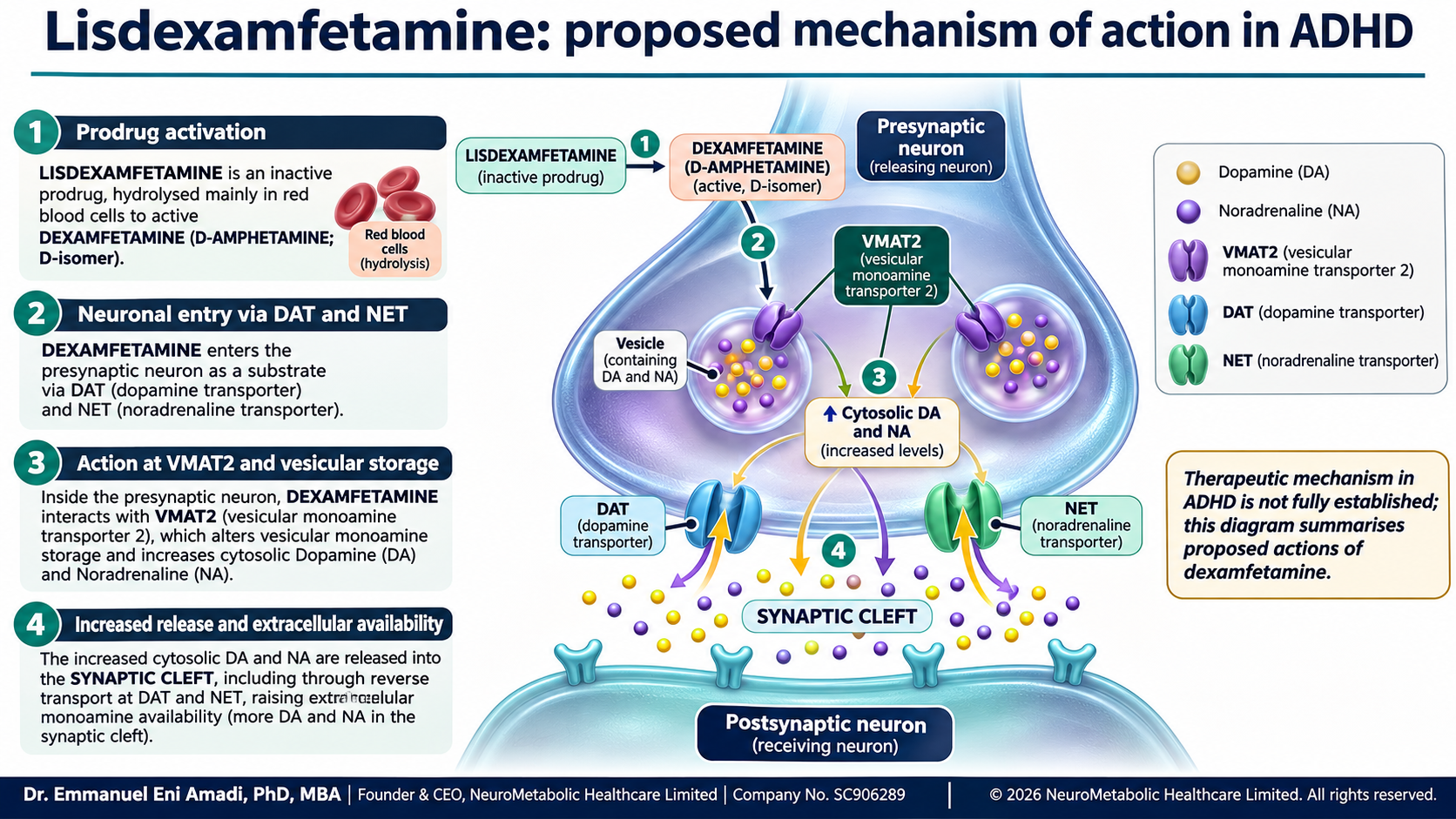
In ADHD, dexamfetamine acts on dopamine and noradrenaline signalling: it enters nerve cells via DAT (dopamine transporter) and NET/NAT (Norepinephrine / Noradrenaline transporter), and affects VMAT2 (vesicular monoamine transporter 2), increasing the availability and release of these neurotransmitters.
It is commonly used as a once-daily treatment and can provide extended symptom coverage.
However, its duration and tolerability vary between individuals.
The choice between these medicines should take account of clinical response, adverse effects, medical history, treatment goals and patient preference.
A major network meta-analysis by Cortese and colleagues (2018) found that, when considering short-term efficacy and tolerability, amphetamines were supported as a preferred first-choice medication class for adults. This research is influential, although UK prescribing decisions should follow current NICE recommendations and individual clinical assessment.
3. What happens when stimulant medication is unsuitable?
Not everyone benefits from stimulant medication.
Some people experience adverse effects. Others have contraindications, inadequate symptom improvement or preferences that make stimulant treatment unsuitable.
Non-stimulant treatment can provide an important alternative.
Atomoxetine
Atomoxetine is a selective noradrenaline reuptake inhibitor.
Unlike stimulant medicines, it does not usually produce the same immediate pattern of symptom improvement.
Its benefits may develop gradually over several weeks.
NICE recommends offering atomoxetine to adults who cannot tolerate lisdexamfetamine or methylphenidate, or whose symptoms have not responded to separate adequate trials of both medicines, taking account of alternative preparations and appropriate doses (NICE, 2018).
Other treatment considerations
NICE also provides recommendations concerning dexamfetamine in specific circumstances, including where lisdexamfetamine is effective but its longer duration of action is not tolerated.
Other medicines, such as Guanfacine and Bupropion (Zyban), may occasionally be considered by specialist services, but prescribing outside standard recommendations requires appropriate expertise and careful justification.
Medication selection should never be based solely on which medicine appears most popular or which has worked for another person.
4. Before prescribing: What should a clinician assess?
A diagnosis does not automatically mean that medication should be started immediately.
NICE recommends a full assessment before initiating ADHD medication.
This includes confirming the ongoing need for treatment and reviewing:
Mental health and social circumstances.
Coexisting mental health and neurodevelopmental conditions.
Current medication and potential interactions.
Substance misuse and diversion risk.
Relevant medical history and contraindications.
Baseline height, weight, pulse and blood pressure.
Cardiovascular history and examination.
A routine ECG is not required before starting stimulants, atomoxetine or guanfacine unless specific clinical indications are present, as described in NICE NG87.
Where indicated, cardiovascular assessment or specialist advice should be obtained before treatment begins.
This is especially important because stimulant medicines can affect pulse and blood pressure.
Prescribing decisions must balance potential therapeutic benefits against individual risks.
5. Why ADHD medication should be personalised
Consider these scenarios: two adults who receive the same ADHD diagnosis.
One works conventional office hours, and needs sustained attention between 9 am and 5 pm.
Another works rotating shifts, sometimes night shifts, and another, day shifts, has irregular sleep patterns and needs flexibility around changing responsibilities.
Their treatment requirements may differ substantially.
Similarly, a person with significant appetite problems, cardiovascular concerns or coexisting anxiety may require additional consideration.
The appropriate medication and formulation should be selected through shared decision-making.
This means discussing expected benefits, potential adverse effects, alternatives and the practical implications of treatment.
The patient's preferences and circumstances are central to this process.
Medication should fit the person's life as safely and effectively as possible—not require the person to organise their entire life around an unsuitable treatment regimen.
6. What side effects should patients understand?
Like all medicines, ADHD stimulant treatments can cause adverse effects due to their pathway signalling:
Dopamine signalling and possible treatment effects:
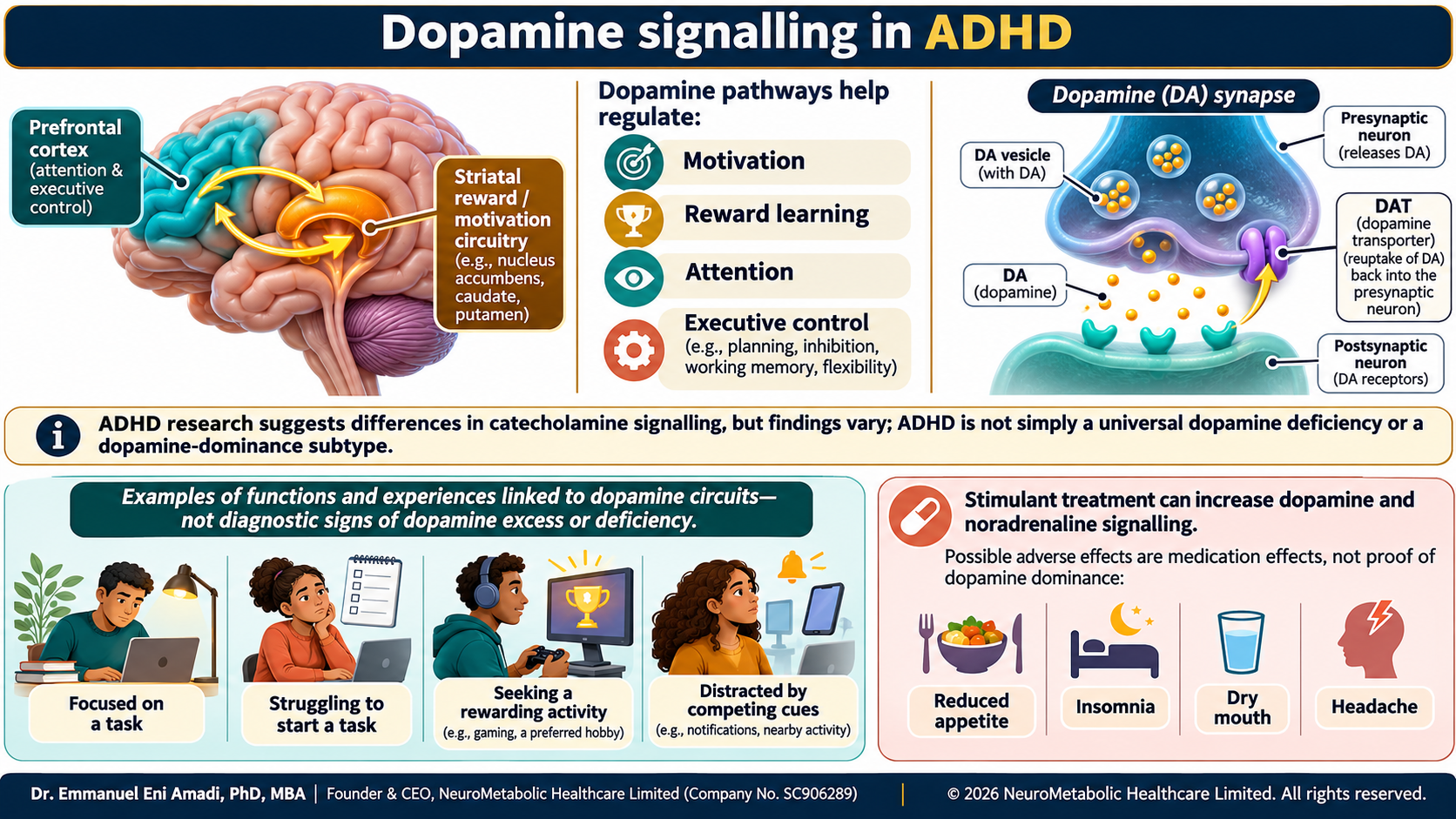
Dopamine pathways contribute to motivation, reward, attention and executive functioning. Stimulant medicines used to treat ADHD can alter dopamine signalling, and some people experience effects such as reduced appetite, difficulty sleeping, dry mouth or headache, and increases in resting pulse or resting blood pressure, and gastrointestinal side effects, such as:
Abdominal Pain: Frequent stomach aches and cramping, especially common in children.
Nausea and Vomiting: A feeling of queasiness or motion sickness, occasionally leading to actual vomiting when starting or increasing doses.
Appetite Suppression: A severe reduction in hunger during peak medication hours, which can cause skipped meals and subsequent evening overeating.
Indigestion/and/or Reflux oesophagitis: Heartburn, dyspepsia, or a burning sensation or pain radiating to the back triggered by hyperacidity (increased stomach acid).
Altered Bowel Habits: Sudden changes in digestion that cause either constipation or sudden diarrhoea, mimicking IBS.
Bloating and Gas: Trapped gas and abdominal distension caused by slowed gastric emptying- again, mimicking IBS.
Dry Mouth: A significant drop in saliva production that can disrupt the initial stages of eating and digestion.
Noradrenaline, arousal and possible treatment effects:
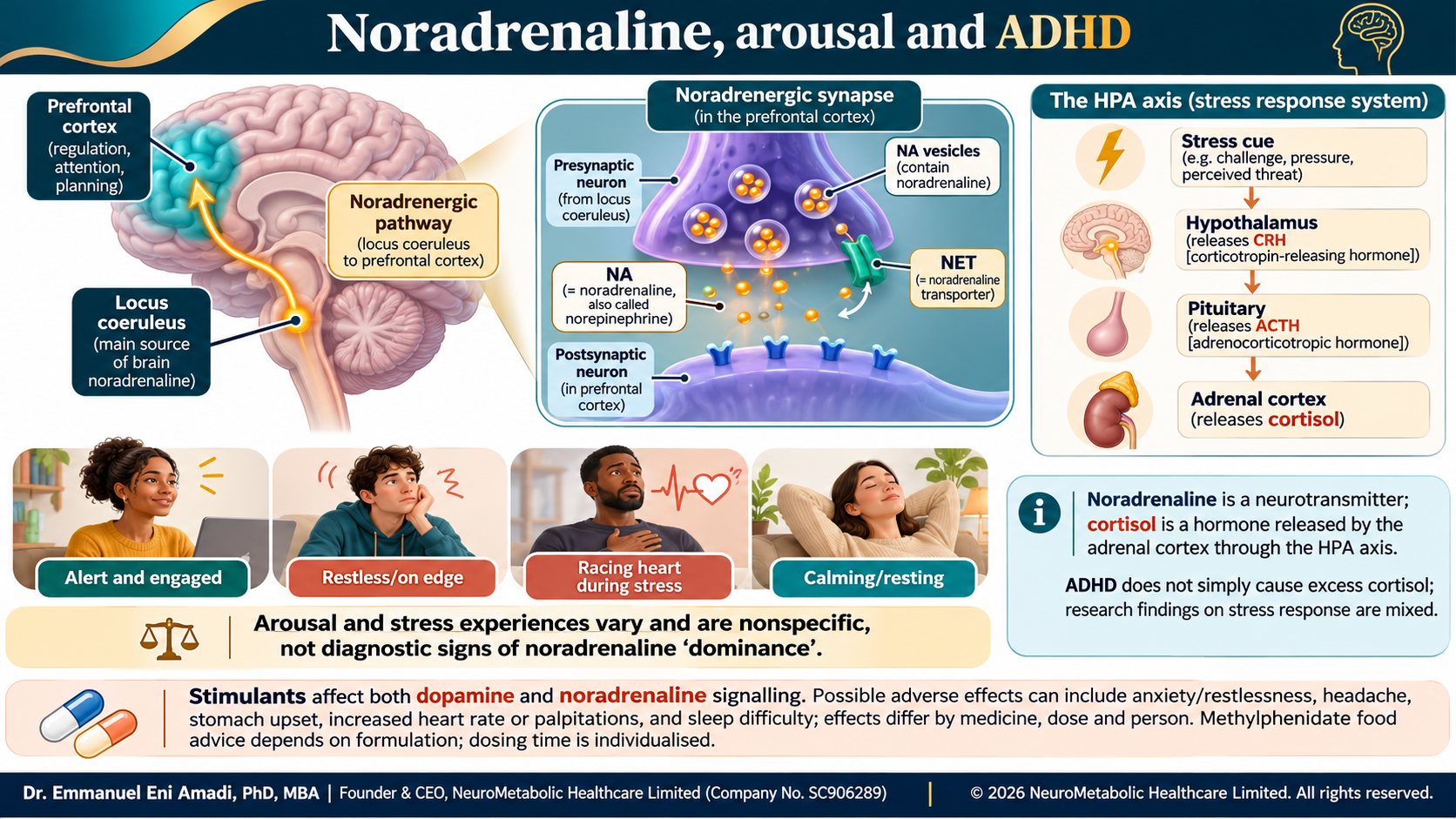
Noradrenaline helps regulate alertness and arousal. ADHD stimulant medicines can also affect noradrenaline signalling, and some people experience anxiety, restlessness, stomach upset, a faster heart rate or palpitations. These effects vary between people and medicines, and cannot be attributed to noradrenaline alone. Noradrenaline is a neurotransmitter; cortisol is a separate hormone released through the body’s stress-response system.
These are recognised medication side effects; they do not indicate a specific dopamine imbalance.
Some people experience irritability or changes in mood.
Atomoxetine may also cause gastrointestinal symptoms, appetite changes, sleep disturbance and cardiovascular effects.
Clinicians should explain relevant adverse effects before prescribing and provide clear advice about when to seek medical attention.
Serious or concerning symptoms require prompt clinical assessment.
It is important not to dismiss persistent adverse effects simply because a medicine is improving concentration.
Successful treatment requires both clinical benefit and acceptable tolerability.
7. Medication titration: Why the first dose is rarely the final decision
Starting medication is only one stage of treatment.
As I was taught at the UK Adult ADHD Network (UKAAN) - London training programme, and through hands-on clinical experience over the last ten years in Mental Health /ADHD, to always “START LOW and GO SLOW”, in a shared-care approach with the patients, titration involves adjusting the dose carefully to identify an effective and tolerable regimen.
NICE recommends that medication should be titrated against symptoms and adverse effects until dose optimisation is achieved.
The aim is to obtain reduced symptoms, positive behavioural change and improvements in education, employment and relationships, with tolerable adverse effects (NICE, 2018).
During titration, clinicians should monitor:
“Symptom-specific” improvements vs. still present symptoms, impairment and “specific” adverse effects using appropriate rating scales and clinical review.
Resting blood pressure and pulse should be checked before and after each dose change.
For some patients, treatment optimisation may be relatively straightforward.
For others, it requires changes in formulation, dose timing or medication.
A lack of response to one treatment does not necessarily mean that all pharmacological treatment will be ineffective.
Titration will be explored in greater detail in the next instalment of this series.
8. Is medication enough?
Medication can be highly effective for reducing core ADHD symptoms.
However, it does not replace the need for education, psychological support, practical adjustments or strategies for managing everyday responsibilities.
For example, someone may experience improved concentration while continuing to struggle with years of accumulated financial disorganisation or low self-confidence.
Another person may benefit from medication but still need support with workplace routines, relationships or emotional wellbeing.
NICE recommends considering non-pharmacological treatment for adults who make an informed choice not to take medication, have difficulty adhering to medication or find it ineffective or intolerable.
Where indicated, structured psychological interventions focused on ADHD may be beneficial.
Treatment should therefore be understood as a comprehensive care process rather than a prescription alone.
9. The importance of ongoing monitoring
ADHD medication requires appropriate follow-up.
NICE recommends monitoring (1) heart rate and (2) blood pressure before and after each dose change, and (3) every six months thereafter.
(4) Adult weight / BMI should also be measured every six months.
Medication effectiveness, adverse effects, adherence and the continuing need for treatment should be reviewed.
NICE additionally recommends that a healthcare professional with training and expertise in managing ADHD undertakes a review of ADHD medication at least once a year.
These reviews provide opportunities to assess whether treatment continues to deliver meaningful benefits.
They also allow patients to raise concerns about sleep, appetite, mood, work performance or other changes in their circumstances.
A medicine that was appropriate when treatment began may need reassessment as someone's health or responsibilities change.
10. My clinical perspective: Treat the person, not simply the diagnosis
In my work involving adult ADHD medication reviews and titration under appropriate clinical oversight, I have become increasingly interested in the relationship between symptom improvement and meaningful everyday outcomes.
A medication review should involve more than asking whether a patient feels better.
It should explore what has actually changed.
Can the person organise their day more effectively?
Are they completing tasks they previously abandoned?
Have their relationships or workplace functioning improved?
Are they sleeping adequately?
Are adverse effects interfering with quality of life?
These questions help translate clinical treatment into outcomes that matter.
My experience has reinforced the importance of individualised care, structured monitoring, patient education and appropriate supervision.
Although my professional background includes independent prescribing and supervised ADHD clinical practice, the clinical experience discussed here should not be interpreted as a claim that every assessment or diagnosis was undertaken independently.
Effective ADHD treatment is not about prescribing the strongest medication. It is about identifying the safest, most appropriate treatment that produces meaningful improvement for the individual.
Conclusion: Medication is a tool, not an identity
For some adults, ADHD medication can make a substantial difference.
It may improve concentration, reduce impulsivity and make daily responsibilities easier to manage.
For others, treatment requires several adjustments before a suitable approach is identified.
Some individuals may choose not to take medication at all.
These decisions should be informed, clinically appropriate and respected.
The central message is simple:
A diagnosis helps explain the difficulties. A personalised treatment plan helps people move forward.
Medication should never define the person taking it.
The objective is to support better functioning, greater confidence, and improved quality of life.
References
American Psychiatric Association (2022) Diagnostic and statistical manual of mental disorders. 5th edn, text revision (DSM-5-TR). Washington, DC: American Psychiatric Association. DOI: 10.1176/appi.books.9780890425787.
Cortese, S., Adamo, N., Del Giovane, C. et al. (2018) ‘Comparative efficacy and tolerability of medications for attention-deficit hyperactivity disorder in children, adolescents, and adults: A systematic review and network meta-analysis’, The Lancet Psychiatry, 5(9), pp. 727–738. DOI: 10.1016/S2215-0366(18)30269-4.
Faraone, S.V., Banaschewski, T., Coghill, D. et al. (2021) ‘The World Federation of ADHD International Consensus Statement: 208 evidence-based conclusions about the disorder’, Neuroscience & Biobehavioral Reviews, 128, pp. 789–818. DOI: 10.1016/j.neubiorev.2021.01.022.
National Institute for Health and Care Excellence (NICE) (2018, updated 2019) Attention deficit hyperactivity disorder: Diagnosis and management. NICE guideline NG87. Available at: NICE NG87.
National Institute for Health and Care Excellence (NICE) (2018) Attention deficit hyperactivity disorder: Diagnosis and management — Recommendations. Available at: NICE treatment recommendations.
Kooij, J.J.S., Bijlenga, D., Salerno, L. et al. (2019) ‘Updated European Consensus Statement on diagnosis and treatment of adult ADHD’, European Psychiatry, 56, pp. 14–34. DOI: 10.1016/j.eurpsy.2018.11.001.
Clinical disclaimer: This article is intended for education and public awareness. It does not constitute individual medical advice. ADHD medicines should be initiated and monitored by appropriately qualified healthcare professionals with relevant expertise.